Watch Size Guide: How To Find The Right Fit for Your Wrist
Watch Size Guide: How To Find The Right Fit for Your Wrist

Buying a watch online is easy until it arrives and looks nothing like you imagined. The fix is simple: stop choosing by diameter alone. The best-looking, most comfortable watch size is the one that matches your wrist measurements and the watch’s lug-to-lug and thickness.
In this guide, you’ll learn:
- How to measure your wrist in 2 minutes,
- what case diameter, lug-to-lug, and thickness really mean,
- a practical size chart for men and women (unisex-friendly),
- and the quick rules that prevent “too big” regret.
Start here: measure your wrist (2-minute method)
1) Measure wrist circumference
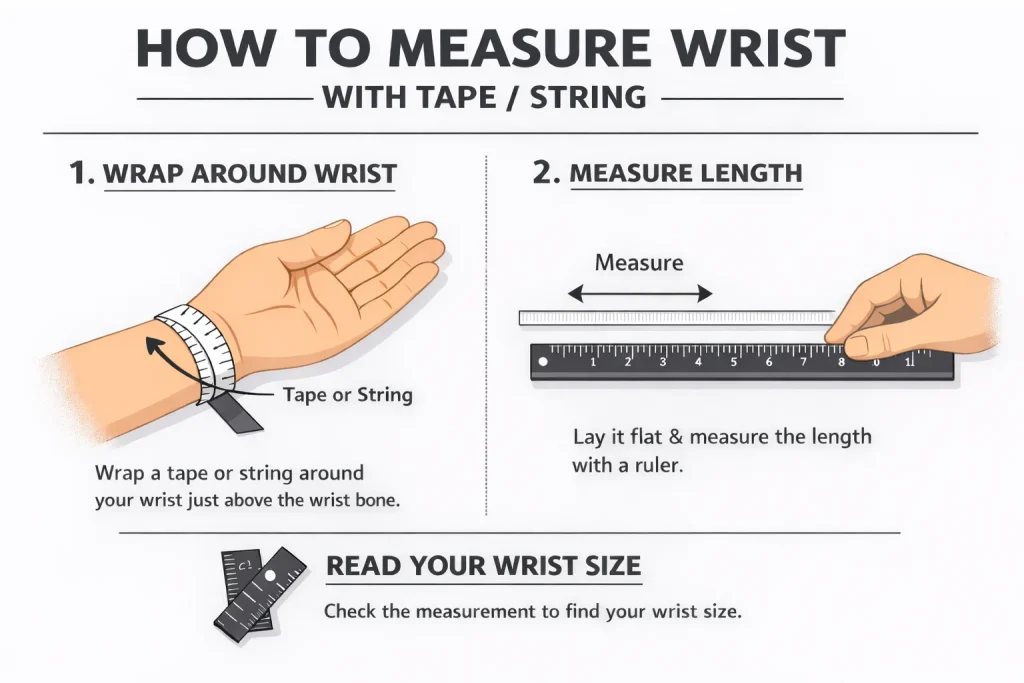
Use a soft measuring tape (best) or a string/paper strip (works great). Wrap it around the wrist where you wear your watch, mark the overlap, and record the measurement.
Tip: Measure the wrist you actually wear a watch on; small differences can happen.
2) Optional but powerful: estimate wrist width
Lug-to-lug is about wrist width, not circumference. A rough estimate some sizing guides use is:
Wrist width ≈ wrist circumference ÷ π (3.14)
You don’t need perfect math here; you just want a ballpark to avoid lug overhang.
Watch sizing terms explained (what actually affects fit)
Case diameter (mm)
Case diameter is the number most listings show, and it’s useful, but it can be misleading because watches are 3D objects with different lug designs and dial openings. That’s why people say, “It’s a 38mm but wears like a 40mm.”
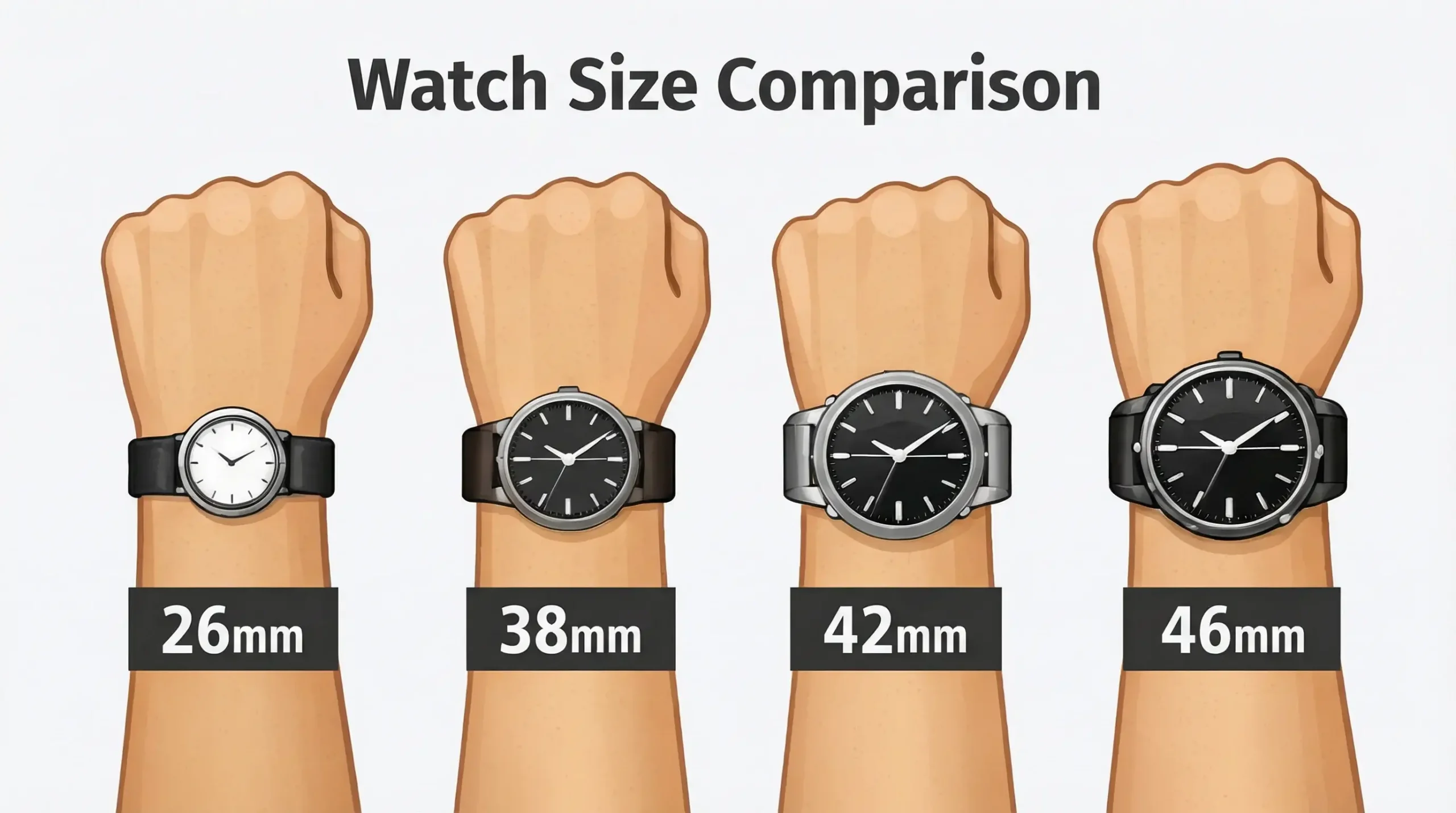
Retail context: one mainstream guide notes men’s watches commonly run 38–46mm (with 42mm very popular), while women’s watches often run 26–36mm, but preference and proportion can override these ranges.
Lug-to-lug (the “will it overhang?” measurement)
Lug-to-lug is the distance from the tip of the top lug to the tip of the bottom lug. This measurement strongly predicts how a watch “spans” your wrist. Many fit guides recommend that the lug-to-lug distance should not exceed your wrist width, or the lugs may hang over the edges.
Case thickness (bulk + cuff clearance)
Thickness changes everything. A watch can have a “reasonable” diameter but still feel bulky if it’s thick. One retailer guide suggests thickness generally scales with diameter (smaller cases around ~7mm and larger cases around ~9mm in their simplified examples).
And many strap/watch guides call out typical ranges like:
- Dress watches: ~6–10mm (better under cuffs)
- Dive/tool watches: ~12–15mm is common
Lug width + strap/bracelet sizing
Lug width (e.g., 18mm, 20mm, 22mm) indicates the strap width that fits between the lugs. Strap length and bracelet link adjustability also affect comfort and how the watch sits.
Quick size chart: wrist size → case diameter (men + women)
This is a starting range, not a law style matters (vintage smaller, sporty larger).
| Wrist circumference | Typical starting case diameter | Notes |
| Small (14–16.5 cm / 5.5–6.5 in) | 34–38mm | Compact lugs help you wear the upper end |
| Medium (16.8–19 cm / 6.6–7.5 in) | 39–42mm | Often, the “most versatile” zone |
| Large (19.3–21.5 cm / 7.6–8.5 in) | 43–46mm | Prioritize lug-to-lug to prevent overhang |
Unisex reality: Many people of any gender wear 36–40mm comfortably, depending on lugs and thickness.
The 3 rules that make a watch look “right”
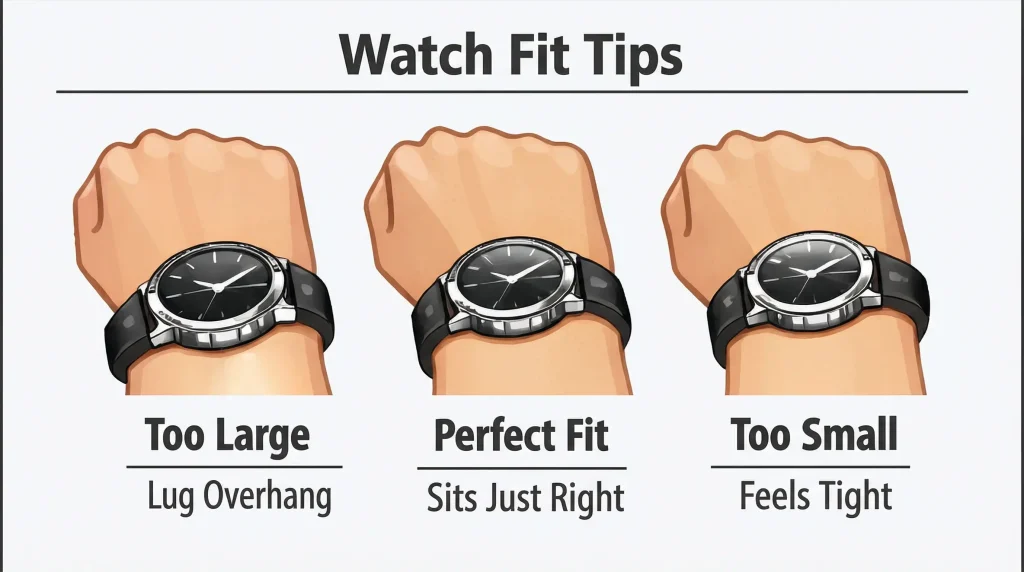
Rule 1: Lug-to-lug should not exceed wrist width
If lug-to-lug is longer than your wrist’s top width, you’ll get overhang and an awkward fit. This is why lug-to-lug is often “more important than diameter” in enthusiast sizing discussions.
Rule 2: Thickness should match your lifestyle (and your sleeves)
- Office/dress/cuffs: favor thinner cases (often ~6–10mm)
- Sport/dive/chronograph: thickness rises; expect more wrist presence
Rule 3: “Wears larger” depends on design
Two watches with the same diameter can wear differently because of:
- long straight lugs vs short downturned lugs,
- thin bezel + large dial opening (looks larger),
- case shape (tonneau/cushion can look bigger),
- integrated bracelets (can broaden the visual footprint).
Men vs women watch sizes (and why wrist size beats gender)
Many buying guides still quote gendered ranges (for example, 38–46mm for men / 26–36mm for women as a typical retail framing), but even those guides acknowledge that preference matters.
A more useful lens:
- Your wrist size and wrist shape determine proportion.
- 40mm can be unisex and often fits medium wrists regardless of gender.
Size by watch type (dress, dive, chronograph, field)
Dress watches
Dress watches tend to look best a bit smaller and thinner (they’re meant to disappear under a cuff). Use the lower end of your diameter range and aim for a slimmer thickness.
Field watches
Field watches are often compact and practical. Many fall into “safe zone” sizing where smaller diameters still look intentional.
Dive & tool watches
Divers often wear larger sizes due to bezels and added thickness. If you want the look without bulk, keep the diameter moderate but watch lug-to-lug carefully.
Chronographs
Chronographs can feel big because they’re often thicker. If you’re between sizes, choose the smaller diameter or shorter lug-to-lug version.
Strap & bracelet fit (comfort matters as much as looks)
Straps change fit:
- Leather is flexible and can feel snug at first; sizing matters more.
- Steel bracelets are heavier but adjustable via links (more forgiving).
Comfort rule of thumb: you want a secure fit that doesn’t spin around, but also doesn’t leave deep marks after a few hours.